Prose as Plumbing: Why Clear Writing Deserves to Be Taught as Technical Infrastructure

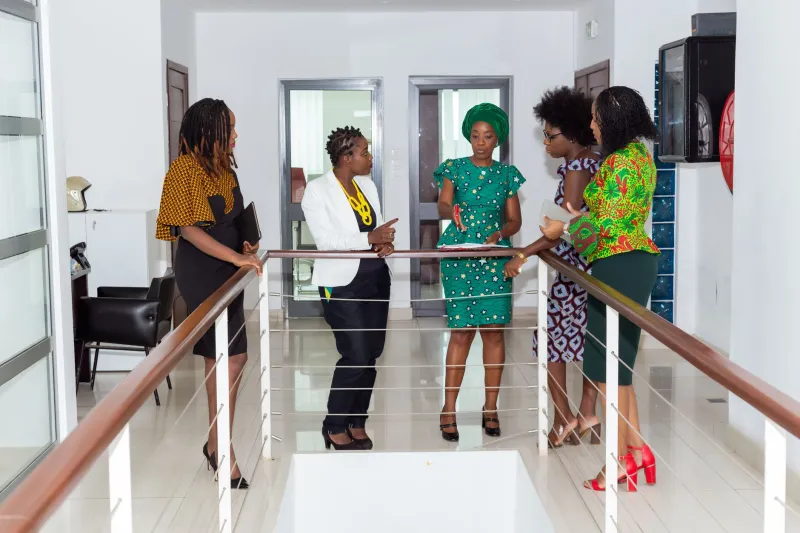
Photo: Txllxt TxllxT, CC BY-SA 4.0, via Wikimedia Commons
There is a phrase that appears in nearly every American job posting and almost no curriculum document: strong written communication. It sits in the bulleted list beside teamwork and adaptability, bracketed under soft skills, as though it were a personality trait that candidates either possess or lack. This is a category error, and it is an expensive one.
Writing is not a disposition. It is infrastructure — the medium on which decisions travel through an organization. A capital request, an incident report, a compliance memo, a pre-read for a board meeting, a public comment on a proposed regulation: each is a piece of writing that either carries weight or collapses under scrutiny. When the prose fails, the decision fails with it, usually in a room the writer never enters.
Abhyasa treats the subject accordingly. Not as a first-year requirement to be cleared, but as a technical practice distributed across the curriculum.
The Misfiling
The soft-skill label survives because writing is difficult to test and easy to admire. It also survives because of an assumption, rarely examined, that clarity is a matter of talent. In practice, clarity is a matter of process: knowing what question the document answers, what the reader must decide, what evidence carries the argument, and what can be cut. Those are learnable skills, and they are learnable by nearly anyone willing to revise.
The label carries a cost for graduates. A student who believes writing is a gift will treat a difficult draft as evidence of personal deficiency rather than as the ordinary midpoint of a professional task. A student who understands writing as engineering treats the same draft as a version to be debugged.
What Writing Across the Curriculum Actually Does
At Abhyasa, writing instruction is not confined to composition courses. Faculty in the sciences assign lab notebooks and technical summaries. Faculty in the social sciences assign policy briefs with a specified decision-maker. Faculty in business and data courses assign one-page memoranda attached to longer analyses. The shared expectation is not that every instructor teach grammar. It is that every instructor make the written form of the discipline explicit, because every discipline has one.
This matters for a specific reason. Students learn to write for a reader when the reader is real and the stakes are legible. A memo addressed to a hypothetical executive teaches less than a memo addressed to a department chair who will respond to it in writing.
The Memo Lab
At the center of the model is a required workshop sequence known on campus as the memo lab. Students bring a live document — a recommendation, a findings summary, a request — and work it through three passes: the structural pass, where argument order is fixed; the evidence pass, where claims are matched to citations or flagged as unsupported; and the compression pass, where the document is cut by a third without losing a decision.
The exercises are deliberately adversarial. Students write the strongest objection to their own recommendation, then answer it in two sentences. They rewrite a dense paragraph for a reader with thirty seconds of attention. They are given a memo with a buried conclusion and asked to find it in under a minute — usually a humbling experience, and one that permanently changes how they open their own documents.
Editing Beside the Machine
Generative tools have made this work more urgent, not less. A student can now produce a fluent page in seconds, which means fluency has stopped functioning as a signal of thought. What remains scarce is judgment about what the page should say and whether it is true.
Abhyasa's approach is neither prohibition nor surrender. Students use AI-assisted editing in supervised workshops, with a disclosure rule: they must document what the tool changed and defend each accepted edit. The disclosure requirement does most of the pedagogical work. A student who accepts a smoother sentence and cannot explain why has learned nothing, and the written record makes that visible to both student and instructor.
Faculty report a consistent pattern. Tools are useful for catching repetition and for testing whether a paragraph's logic survives a paraphrase. They are unreliable on claims, context, and anything requiring institutional knowledge. That division of labor is precisely the professional reality graduates will encounter, and it is better encountered in a classroom than in a client email.
Revision as Professional Discipline
In most workplaces, the first draft is not the deliverable. It is the raw material for a review cycle that may involve three colleagues, a supervisor, a legal reviewer, and a client. Graduates who have not practiced revision under deadline tend to experience that cycle as an indictment. Graduates who have practiced it tend to experience it as Tuesday.
That is why Abhyasa's writing requirement includes timed revision: forty minutes, a substantive comment from a peer, a complete rewrite. The exercise is uncomfortable, which is the point. Composure under review is a professional asset, and it is built, not summoned.
What Employers Are Buying
Hiring managers rarely ask whether a candidate can write in the abstract. They ask whether a candidate can be trusted with the document that goes outside the organization. That trust is extended on evidence of three capabilities: reasoning that holds on the page, revision that responds to critique, and prose calibrated to a decision-maker's time.
All three are teachable. All three are, at present, unevenly taught. Colleges that leave writing to a single required course are betting that transfer will happen on its own. It usually does not.
The Case for Doing It Properly
The counterargument is cost. Writing-intensive coursework takes faculty time, and feedback on prose is slow and laborious. That is true, and it is also true of laboratories, studios, and clinical placements — the other places where a discipline is practiced rather than described.
The more persuasive argument is the one graduates make. Ask an alumna five years out what she uses every day, and the answer is rarely a formula. It is the ability to take a complicated situation, reduce it to two pages, and be believed. That is not a soft skill. It is the plumbing, and buildings do not stand without it.