The Degree That Bends Around a Life: Inside Abhyasa's 6 P.M. Cohort

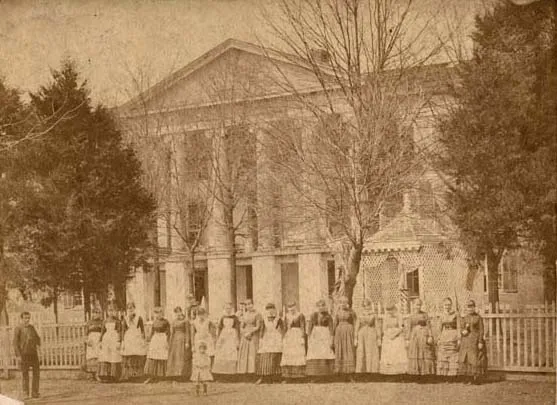
Photo: LBM1948, CC BY-SA 4.0, via Wikimedia Commons
At six o'clock on a Wednesday, the parking lot at Abhyasa Women's Degree College fills in a pattern that would confuse anyone picturing a residential campus. There are sedans with car seats in the back, a cluster of rideshare drop-offs, and a handful of students who have changed out of scrubs in the restroom. Inside, the evening cohort is arriving — a group whose average age is closer to thirty-five than nineteen, most of whom worked a full shift today and will work another tomorrow.
The 6 p.m. cohort is not an outreach program appended to the college's main operation. It is a parallel degree structure, built on the premise that a student's life will not rearrange itself to accommodate a course catalog. The catalog rearranges instead.
Who Actually Enrolls at 6 P.M.
The evening and weekend population at Abhyasa is not monolithic, but several profiles recur. There are women who started a degree years ago at a community college and stopped within a semester of finishing. There are healthcare workers and school paraprofessionals whose employers require a bachelor's degree for advancement they are already qualified to perform. There are women reentering the workforce after years of caregiving, and women whose first career ended abruptly and who need a credential that opens a second one. Many are parents. A substantial number are the first in their families to attend college at all.
What they share is not a demographic category but a constraint: they cannot add four years of full-time study to a schedule that is already at capacity. The program's design question is therefore not how to recruit them. It is how to make completion physically possible.
Designing Backwards From a Tuesday
The scheduling model begins with a concrete exercise that faculty and advisors conduct each term: map a realistic week for a student working thirty-five hours, parenting two children, and commuting. Then build the term around what remains.
The result is a structure with several distinguishing features. Core courses in each major run in the same evening slot across a full academic year, so a student's childcare arrangements, once solved, stay solved. Synchronous class meetings are limited to one evening per week per course, with the remaining instruction delivered asynchronously and assessed through weekly written checkpoints rather than open-ended discussion boards. Weekend intensives replace some standard laboratory and presentation requirements, compressed into four Saturday sessions per term.
Accelerated terms are sequenced so that a student can complete roughly thirty credits a year at two courses per term while retaining a genuine break between terms. That pace is deliberate. Programs that push working adults to three simultaneous courses see completion drop, and an unfinished degree serves no one.
Childcare as Academic Infrastructure
A degree pathway that ignores childcare is a degree pathway for women without children, which in practice means it excludes many of the students who most need it.
Abhyasa operates an evening childcare room during class hours in partnership with a local provider, priced on a sliding scale tied to Pell eligibility. The arrangement covers children from infancy through elementary age and is scheduled to open thirty minutes before the first class and close thirty minutes after the last. That half-hour margin is not incidental; it is the difference between a semester completed and a semester abandoned.
For students in areas without accessible care, the college maintains a small emergency fund for backup childcare during exam periods and clinical placements. It is a modest program by design — a bridge, not a subsidy — but advisors report it is among the most frequently used supports in the evening cohort.
Credit for What She Already Knows
Adult students rarely arrive empty-handed, and treating them as though they do is both wasteful and demoralizing. Abhyasa's prior-learning assessment accepts several forms of documented learning: transfer credit from regionally accredited institutions, standardized examinations such as CLEP and DSST, credit recommendations for military and corporate training evaluated by recognized bodies, and portfolio assessment for college-level learning acquired through professional responsibility.
Portfolio review is the least understood and most consequential piece. A licensed practical nurse who has managed clinical documentation for a decade may demonstrate learning equivalent to an introductory health-information course. A retail manager who has run scheduling and inventory for a mid-sized store may demonstrate learning equivalent to a business operations elective. Faculty assessors evaluate portfolios against published course outcomes, and no credit is awarded without a documented match.
In practice, this can reduce a degree plan by a full year, which matters more than it sounds: every term not paid for is a term not financed.
The Completion Coach
The evening program assigns each student a completion coach — a staff advisor distinct from the academic advisor, whose responsibility is logistics rather than curriculum. Coaches handle registration holds, transcript problems, financial-aid appeals, and the ordinary administrative frictions that cause working adults to quietly stop enrolling.
The coaching model includes active outreach during the two weeks before each term's registration deadline. Students who have not registered receive a call, not an email. The intervention sounds trivial and is not: a large share of adult students who leave college do so not after failing a course but after missing a deadline during a difficult month.
Financing an Adult Degree
Cost is the constraint that ends most adult degree attempts, and the program is built to address it in the open rather than in a financial-aid office conversation that happens too late.
Students twenty-four and older are generally classified as independent on the Free Application for Federal Student Aid, which typically increases eligibility relative to dependent students. The college maintains a list of employers in the region offering tuition assistance benefits, and advisors help students draft the request. State completion grants targeted at near-completers are reviewed at the point of admission, not after the first term. Payment plans spread the balance across each term rather than requiring a lump sum before classes begin.
None of this makes the degree free. It makes the cost legible and, more importantly, forecastable — which is what a household managing a mortgage and childcare actually needs.
The Part People Underestimate
Prospective students ask about scheduling and tuition. What they rarely ask about, and what determines outcomes, is whether the institution treats them as full members of the academic community after 5 p.m. At Abhyasa, library hours extend to 9 p.m. on weeknights, faculty hold office hours by video after 7 p.m., and the 6 p.m. cohort has its own student organization with a budget and a seat on college governance.
The graduation rate for the evening cohort is the metric the college watches most closely, because completion is the only outcome that matters to a student who has already restarted once. Everything above — the locked scheduling, the childcare room, the portfolio review, the phone call before registration closes — is in service of that single number.
A degree that fits a full life is not a diluted degree. It is a degree designed by people who understood that the student's life was never going to shrink, and that the institution's job was to meet it.